
Research Papers

Research and essays from Islamabad Brazilian Jiu Jitsu on child safeguarding, the science of training, and gender, violence and participation in the sport.

women on the mats cover ISLAMABAD BRAZILIAN JIU JITSU

Women on the Mats: What It Takes to Bring Women Into Brazilian Jiu-Jitsu, and Keep Them There

Executive Summary Women remain roughly one in ten Brazilian Jiu-Jitsu practitioners worldwide, and the pipeline thins as rank rises: registry analyses show women at about 14% of white belts but only 4% of black belts, a decline of more than two-thirds through the ranks. That attrition is not a demand problem. It is a design
Women on the Mats: What It Takes to Bring Women Into Brazilian Jiu-Jitsu, and Keep Them There Read More »

Brazilian Jiu-Jitsu & Child Safety: A Systematic Framework for Protection

Brazilian Jiu-Jitsu & Child Safety: A Systematic Framework for Protection

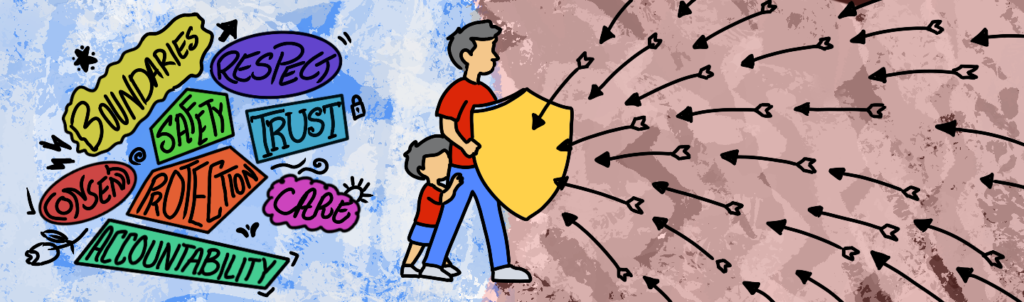
Executive Summary At Islamabad Brazilian Jiu-Jitsu (ISBBJJ), safety is foundational to our sport and pedagogy. BJJ is a close-contact discipline that requires physical proximity, trust, and interaction between children and adults. Our training environments are structured for safety, with rules designed to minimize physical injury. However, child safety extends beyond physical risk to emotional, psychological,

Brazilian Jiu-Jitsu & Child Safety: A Systematic Framework for Protection Read More »

NeuroScience BJJ & The Brain

Brazilian Jiu-Jitsu & the Brain: What the Science Says

Executive summary Brazilian Jiu-Jitsu (BJJ) is a non-striking, partner-based discipline that pairs high-engagement problem solving with controlled physical stress. Across emerging studies, three themes stand out: (1) short-term cognitive function appears unchanged after brief choke exposures when measured with rapid ocular-motor screens; (2) long-term cerebral blood flow and cognition in elite BJJ athletes appear preserved,

Brazilian Jiu-Jitsu & the Brain: What the Science Says Read More »

violence against women

Violence Against Women: A Human Issue, Not a “Pakistani Culture” Problem

The Numbers Tell Us Something Clear Violence against women is not confined to any one country, faith, or culture—it is a human crisis. Globally: 1 in 3 women (736 million) experience sexual or physical violence in their lifetime (WHO/UN Women). Western democracies: In the U.S., over 22 victims per 1,000 people aged 12+ face sexual

Violence Against Women: A Human Issue, Not a “Pakistani Culture” Problem Read More »

Scroll to Top

HAVE YOU EVER DONE JIU JITSU BEFORE?